The Last Accessible Indie Handheld: Why the Switch Lite Matters and What Comes After
I’ve been thinking about handhelds a lot lately. Not emulation boxes, not PC portables, not niche toys with monochrome screens. Just straightforward handhelds you can actually play games on. And I keep coming back to the same thing: the Nintendo Switch Lite might be the last one that actually works for indie developers and players.
Let me back up.
The Current Landscape
If you want to play indie games on a handheld right now, your options are basically these:
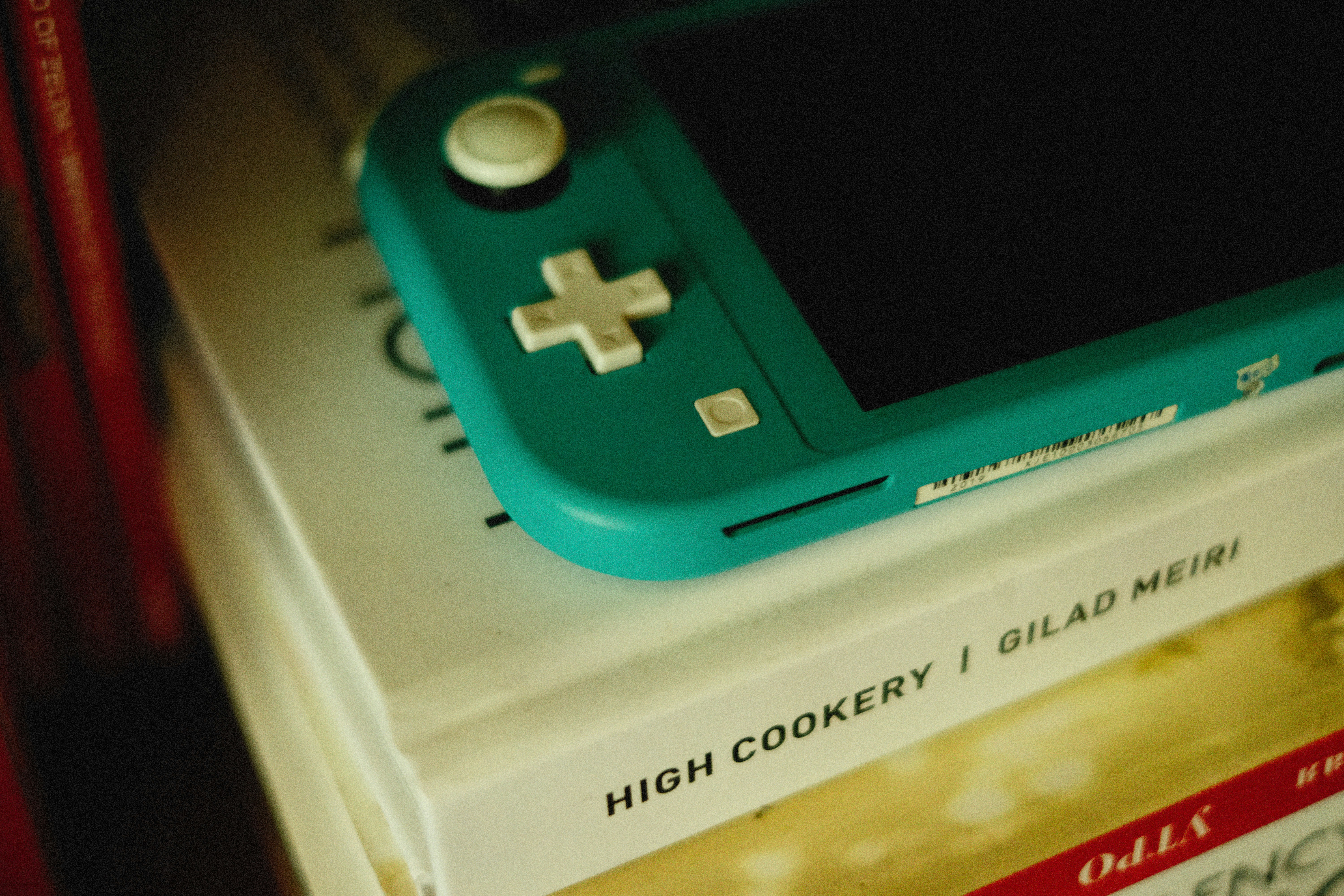
The Nintendo Switch Lite is probably your best bet. It’s cheap (around 89€ used), the eShop still works, Nintendo’s support continues, and there’s a massive library of actual indie games made for it. It’s not flashy, it’s not cutting edge, but it does the job. You can pick one up, turn it on, and play games from developers who made them specifically for that hardware. That’s kind of remarkable when you think about it.
The Steam Deck exists, sure. It’s powerful, flexible, runs Linux. But it’s also a full sized portable PC that costs 400€ or more, runs proprietary software, and requires constant tinkering and account management. It’s great if you want to run PC games portably. It’s not what I’d call a handheld console. The form factor alone kills it for me. It’s a laptop without the keyboard.
Android handhelds like the Retroid Pocket or Anbernic devices exist in the space between emulation boxes and gaming devices. They’re fine if your goal is to replay old systems via emulation. NES through maybe early PS2. But they’re not really platforms for new indie games. They’re preservation devices.
The Playdate is the boutique option. Around 300€ all in once you factor in shipping and German customs, for a device with a black and white LCD screen, no backlight, a hand crank, and a library so limited you’ll finish it in a weekend. It’s a beautiful object, genuinely clever in its design philosophy, but it’s also overpriced and underpowered for anyone who actually wants to play games on a handheld. It’s an art project that happens to play games, not a gaming device.
And then there’s the Nintendo Switch 2. But here’s the problem: it’s not actually the platform yet. Indie developers can barely get devkits for it. Nintendo doesn’t seem interested in distributing them widely. The performance bump doesn’t change anything for actual game design. Games like Deltarune work fine on both systems. And Nintendo itself is still releasing most games on both Switch 1 and Switch 2. The list of Switch 2 first party exclusives is tiny. It’s barely a console generation transition at all. Most people with a Switch 2 just play Switch 1 games on it. It’s a better version of the same platform, not a new one. That’s not how you build an ecosystem.
Why This Matters
Here’s the thing: the Switch Lite is the last handheld that’s accessible, powerful enough for actual games, affordable, and genuinely functional as an indie gaming platform. It hit a perfect mix of factors that probably won’t happen again.
Nintendo made a device that was cheap enough for impulse purchases but powerful enough to run complex games. They built an ecosystem where indie developers could release games alongside AAA titles without second class treatment. The hardware was simple enough to develop for, the distribution was straightforward, and the price point meant developers could actually sell units.
But Nintendo isn’t interested in maintaining that position. They’re moving upmarket, chasing higher margins, and locking down their platform further. That’s not necessarily wrong. It’s a business. But it creates a vacuum.
The indie handheld space has a problem: there’s no middle ground anymore. You’ve got preservation devices (Android handhelds), niche art projects (Playdate), general purpose PCs (Steam Deck), and walled gardens (Switch 2). What you don’t have is an actual platform for new indie games that’s genuinely accessible to both developers and players.
The Viability Question
The real issue is that the Switch Lite will eventually stop being supported. It won’t happen tomorrow. But Nintendo hasn’t committed to keeping the eShop running indefinitely. They closed the 3DS eShop in 2023, about six years after the hardware was discontinued. The Switch Lite eShop is still running now, with Nintendo saying services will continue for the foreseeable future. But foreseeable future is a vague promise. Eventually, the services will close, the servers will shut down, and your handheld becomes a local only device.
That’s not the end of the world. Your Switch Lite will still work. You can play the games you own locally. But you won’t be able to buy new indie games. You won’t get updates. You won’t be part of an active platform anymore.
That’s when the gap becomes real.
If you’re an indie developer in 2032, where do you release? Steam Deck? Too niche, too dependent on Valve’s decisions. Android handheld? Emulation box, not a real platform. Mobile? You’re competing with free to play gacha hellscapes. Playdate? The device is tiny and the community is boutique.
There’s no handheld console anymore that says: This is for indie games. It’s DRM free. It’s affordable. It’s a real platform. The Switch Lite was that device. And there’s nothing waiting to replace it.
The Impulse
That gap is why I’ve been sketching out ideas for a handheld. Not a commercial product. I’m realistic about the resources that would require. More like a conceptual answer to what would actually fill this space.
What would it take? An ARM64 device running Linux, small enough to fit in a pocket, powerful enough to run actual games, with a store that’s a thin frontend to local files rather than a walled garden. Offline first. DRM free. Designed from the ground up for Godot and indie developers who actually care about making good games rather than chasing algorithmic optimization.
The hardware math is solvable. Snapdragon chips that are three generations old are cheap, good enough, and have solid open source driver support. You don’t need cutting edge performance for good indie games. The software is more interesting: you’d need a custom OS, an SDK, a publishing workflow, a way to handle updates and cloud saves without requiring proprietary accounts.
None of it is impossible. Most of it exists in pieces already. But pulling it together into something coherent? That’s the project.
Just Thinking Out Loud
I’m not announcing anything. I don’t have funding, I don’t have a timeline, I don’t have a team. This is rough thinking, throwing ideas at the wall. Maybe it happens, maybe it doesn’t. The point isn’t that I’m going to build this. The point is that something like this needs to exist.
But I do think the problem is real, and I think it matters. The indie game space needs a handheld platform that treats developers and players as equals, that respects ownership, that doesn’t disappear when a corporation decides to shut down the servers.
And DRM free matters more than people think. Look at Hollow Knight Silksong. Team Cherry released it at 20 dollars with a DRM free version on GOG. It got cracked in 15 minutes. Faster than the official stores could even handle the load. And then the piracy community collectively decided not to pirate it. On the main piracy subreddit, people were telling each other to buy it instead. People who hadn’t paid for a game in years. That’s not about DRM stopping pirates. That’s about respect working better than enforcement ever will.
The Switch Lite is here now, and it works. I’m not in any rush. But I’m keeping an eye on the gap, thinking about what would actually fit there if something ever did.
Because eventually, something will need to. And it probably won’t come from Nintendo.